
Dating Filipino Women: An Honest Guide to Values, Courtship & Family
Dating Filipino women means dating someone shaped by close family ties, but not by one personality type. Family often comes first, even with money. Courtship tends to be slower and more respectful. Communication can be indirect. These patterns are real, but every woman is an individual. Treat this guide as context, not a checklist.
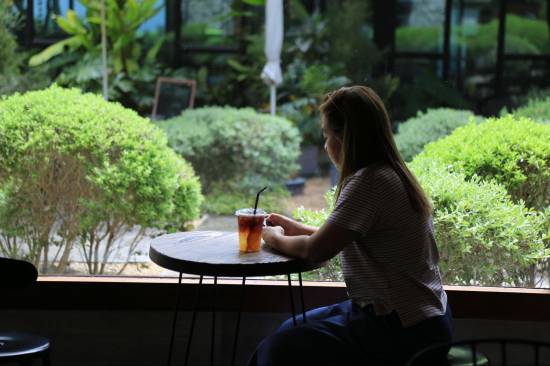
A quiet café is one of the easiest places for a first meeting.
To be honest, there's a lot of junk on the internet. Tons of articles about Filipino women are full of outdated info and give a very one-sided view. Most of them describe Filipino women as calm, sweet and hard-working: someone who doesn't ask too many questions and doesn't create problems. Pretty much a perfect partner, huh?
But as we know, life simply doesn't work like this. Every single person is only human, after all. There are lively, extroverted Russians (not so cold, huh?), quiet Colombians and warm, sweet Germans.
The goal of this article is to be honest and show the whole spectrum, not just one perspective. After reading it, you'll have a full picture of the Filipino mentality and what it's based on. We studied authoritative sources so we don't sound shallow, and to show you as many sides of the spectrum as possible.
Contents
- Core Cultural Values of Filipino Women in Relationships
- Traditional Courtship vs. Modern Dating
- Practical First Date Etiquette in the Philippines
- Navigating Cross-Cultural Expectations & Long-Distance Dating
- Connecting with Sincere Singles Online
- Frequently Asked Questions
Core Cultural Values of Filipino Women in Relationships
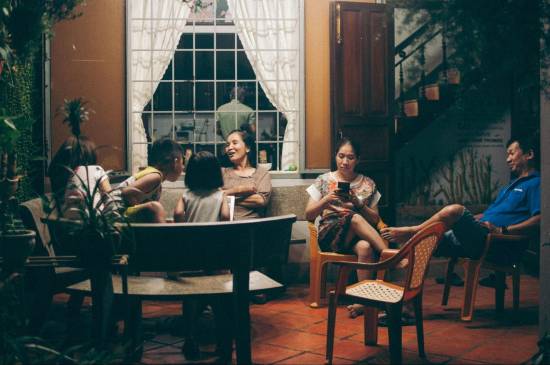
For many Filipinos, family time is part of everyday life.
Family values in the Philippines shape how many Filipino women approach relationships. But they describe a culture, not a personality. How strongly each one shows up depends on the woman, her family and where she grew up.
The Centrality of the Family Unit (Pamilya)
For most Filipinos, family is the center of life. It usually includes grandparents, aunts and cousins too. Filipino psychologists call the value underneath this kapwa: a sense of shared identity with the people around you. For you, this means one thing. Sooner or later, you're getting to know her family too.
Emotional Warmth, Faith, and Loyalty
Faith is part of everyday life for many Filipino women and their families. In the 2020 census, 78.8% of Filipinos identified as Roman Catholic. For some, that means Sunday Mass and traditional views on marriage. For others, it means very little, so ask rather than assume.
Loyalty often reaches the whole community. The best-known example is bayanihan, "being a community." Neighbors once lifted a family's house on bamboo poles and carried it to a new spot together. Expect her to show up for her people. She'll expect the same of you.
Traditional Courtship vs. Modern Dating
Filipino dating culture mixes old courtship habits with modern apps and video calls, and many Filipino women move between both.
Area | Traditional courtship (ligaw) | Modern online dating |
Pacing | Slow: often a year or more before marriage is discussed | Faster to start: chats begin the same day, but trust still takes time |
Communication | Indirect and in person: visits, letters, serenades (harana) | Messages and video calls; indirect signals still show up in text |
Family involvement | From the start: the suitor visits her home and introduces himself to her parents | Later: usually once things are serious, and meeting them signals commitment |
From Traditional Ligaw to Online Messaging
Filipina relationship traditions start with ligaw (courtship). A man who wanted to be taken seriously visited her family and introduced himself to her parents. Courting a Filipina meant courting her family too. Most of this has moved online, but many Filipino women still value the same things: steady attention, patience and respect for her family.
Indirect Communication and the Concept of Tampo
Tampo is the quiet withdrawal someone shows when their feelings are hurt: shorter replies, a little distance. "Sulking" comes close, but it's not the same. In a culture that avoids open conflict, tampo is an accepted way to say "I'm hurt" without a fight. The other person should notice and make the first step, often with lambing, small gestures of affection. If her messages suddenly get shorter, gently ask what's wrong. Don't guess.
Practical First Date Etiquette in the Philippines

A daytime walk keeps the first date relaxed and public.
Safe, Public Daytime Date Ideas
For a woman to feel safe, a first date after online chatting should only happen in a public place. Ideally, it shouldn't be too demanding either: no sports or cultural activities. A simple coffee is good enough, because the goal is to actually talk and see how the conversation goes.
Avoid posh restaurants with a huge bill. They can raise questions about unspoken expectations: "If he took me to such a place, what does he actually expect from me?" A relaxed, neutral spot with modest prices, like a café where you can sit and chat with people around, creates a truly easy-going atmosphere. That's exactly what a first offline meeting needs.
Dining Etiquette and Cultural Sensitivity
So who pays? Filipinos themselves disagree. The question went viral on Filipino TikTok in 2022. One camp argued for KKB (kanya-kanyang bayad, "each pays their own"). Many others said the man should take the lead. If you invited her, offer to pay, without making a show of it. If she insists on her share, accept gracefully.
What matters more is how you come across. In a 2024 Bumble survey, 65% of Filipino women said they want a partner who is emotionally consistent, reliable and has clear life goals. Politeness, listening and following up say more than who paid for the coffee.
Navigating Cross-Cultural Expectations & Long-Distance Dating
When dating a Filipina from abroad, money and distance are the two biggest tests.
Setting Healthy Financial and Personal Boundaries
Cultural norms about what family members owe each other can be stronger than you might think. In some countries, adult children take enormous pride in paying for their parents' living costs and even brag about it to their friends. In other countries, this isn't a thing at all.
For many Filipino women, family support is one of those "supposed to be" rules. Researchers even have a name for it: tagapagtaguyod na anak, the child who supports the family. Often it's the eldest, or whoever earns the most. The reasons are need, duty and utang na loob (gratitude). The scale is real: in 2025, Filipinos abroad sent home a record $35.6 billion, about 7.3% of GDP. Many breadwinners take pride in this role. Studies also describe the cost: stress and personal plans put on hold.
That said, it doesn't mean that you as a partner should automatically follow this. Setting boundaries from the start is crucial. Doing something that makes you uncomfortable will never lead to anything good, even if at first you do it because you feel sorry for her parents when you see how hard they struggle and how they live.
One rule has no exceptions: if someone you have never met in person asks you for money, it's a scam, no matter what the story is.
Overcoming Distance in International Relationships
The first rule: meet offline as soon as you can. Of course, you need some time to get to know each other online, including a few video calls, which are also an important safety check. But you can only see the real person behind a nickname when you meet face to face.
Think about it. Even when you chat with old friends, meanings get distorted. Why didn't she put a smiley at the end? Did I do something wrong? Why does he end every sentence with "..."? Is he unsure? In a bad mood? Now imagine how much gets lost when you're chatting with someone you've never met. Add a different culture with its own unspoken signals (remember tampo?), and the room for misunderstanding grows even bigger. Real interest moves toward meeting. Scams move away from it.
Connecting with Sincere Singles Online
Ready to meet Filipino women who want something real? The platform matters. FilipinoKisses has been connecting people for 23 years. Our team checks every profile and photo by hand, and suspicious accounts are banned. Still, no platform catches every scammer. So the rules from this guide still apply: video call early, meet in person, and never send money to someone you haven't met.
Compare Filipino dating sites or create your free profile and see who's online today.
Frequently Asked Questions
How do Filipino women feel about age differences?
There's no single answer. It depends on the woman, just like anywhere else. Age gaps are common in couples all over the world, international or not. What usually decides whether a relationship works isn't the number of years but a deeper match, or mismatch, in personality and values.
Research backs this up, with a caveat. On average, age-gap couples are just as committed as same-age couples. But their happiness tends to drop faster over the years, as partners reach different life stages.
That's where very large gaps get tricky. When a man in his 60s or 70s is specifically looking for a woman in her early 20s, the gap stops being "just a number." She may be thinking about children and building her life, while he is thinking about retirement and health. And when one partner has far more money and the other comes from a family that relies on her support, it becomes hard for both of them to tell whether the bond is built on "we really clicked" or on financial need. This isn't a judgment of either person. It's a reason to ask yourself honestly what each of you wants from the relationship.
Is it necessary to learn Tagalog or Cebuano?
No. English is an official language alongside Filipino (based on Tagalog), so you can date in English. At home, though, people speak many languages. In the 2020 census, Tagalog led with 39.9% of households. Bisaya/Binisaya followed with 16% and Cebuano with 6.5%. Ask which language her family speaks. If she's from the Visayas, our guide to Cebu women is a good next read. A few words like salamat (thank you) and po (the polite word for elders) show respect.
When is the right time to meet her family?
When you have no doubts about her and your relationship is truly serious, because for many Filipino families, meeting them means much more than a casual hello.
Meeting her family creates a sort of unspoken commitment: "If he met us, he has serious intentions, which means he wants to marry her." That's what a traditional family would think, even if only subconsciously.
In the US, the UK or Germany, meeting a partner's parents is often a more relaxed step. For Filipino families, it's quite a big thing when their daughter's partner meets the whole family. So before you do, make sure you really have no doubts about your Filipino partner as a person, you know her well and your relationship is serious.
When the day comes, small gestures go a long way. Greet her parents and elders with respect, and don't arrive empty-handed: a small pasalubong, a gift from your home country or something sweet for the table, is a warm and traditional touch.
How can I safely meet Filipino singles online without running into scams?
A: Stick to established platforms with manual photo verification, move to video calls early, and never send money or financial assistance to someone you have not met in person.
